Showing posts with label Memory. Show all posts

Monday, November 4, 2024

A TIMELESS IMAGE: YOUTH AND COMRADESHIP


An Undated Group Photo of Young Men (Trainees? New Recruits?)

Inspired by the provocative period images that Tony often posts on his excellent blog, Tin Soldiering On, I thought that I would share an image that I found particularly arresting. I ran across the above while noodling around on ebay (where you can find many old military portraits and photos).  This one caught my eye so much so that I went ahead and bought the physical artifact.  It is undated, but depicts a group of German hussars, certainly in the era before the Great War.  And very young troopers they are. 
 
Then again, it may just be that they seem young to my eyes now--when I was in my early years of service, I (and my contemporaries) probably looked just as young to our seniors, even if we didn't think of ourselves as such. Above, portrait of the Meanderer shortly after arriving at his first posting as a 2nd Lt (also in the cavalry).

Speaking of which, perhaps it is just me, but unlike many of the rather formulaic soldier portraits of the time, this one jumps out as very contemporary and relatable: it could be any group of comrades at any time.  As a product,  it seems to be a photo not unlike the ones that they still take and provide today (the photo of the Meanderer, above, was such a one, taken by a contract photographer in 1982: yes, they had color photography then). Getting back to the old(er) photo, the writing on the picture says "Stube 74": which translates (literally) to "Room 74." So my surmise is that these are barracks-mates. Most likely, each group was photographed and the pictures reproduced and made available for purchase (I'm sure that they were bought and sent home to relatives, as were those in my day--in the pre-digital age). Perhaps other similar groups had more stiff and generic "stand to attention" looks, but this crew seems very lively--you can just imaging them getting ready for the shot, deciding on all having a smoke in their hands and then striking their poses for the photo.  Anyway, enough blather.  As usual, you may clix pix for BIG PIX. Below, I've divided the photo into 3 expanded studies for easier viewing.  


If every picture tells a story, there are many that can be told here. 

Excelsior!

Thursday, October 17, 2019

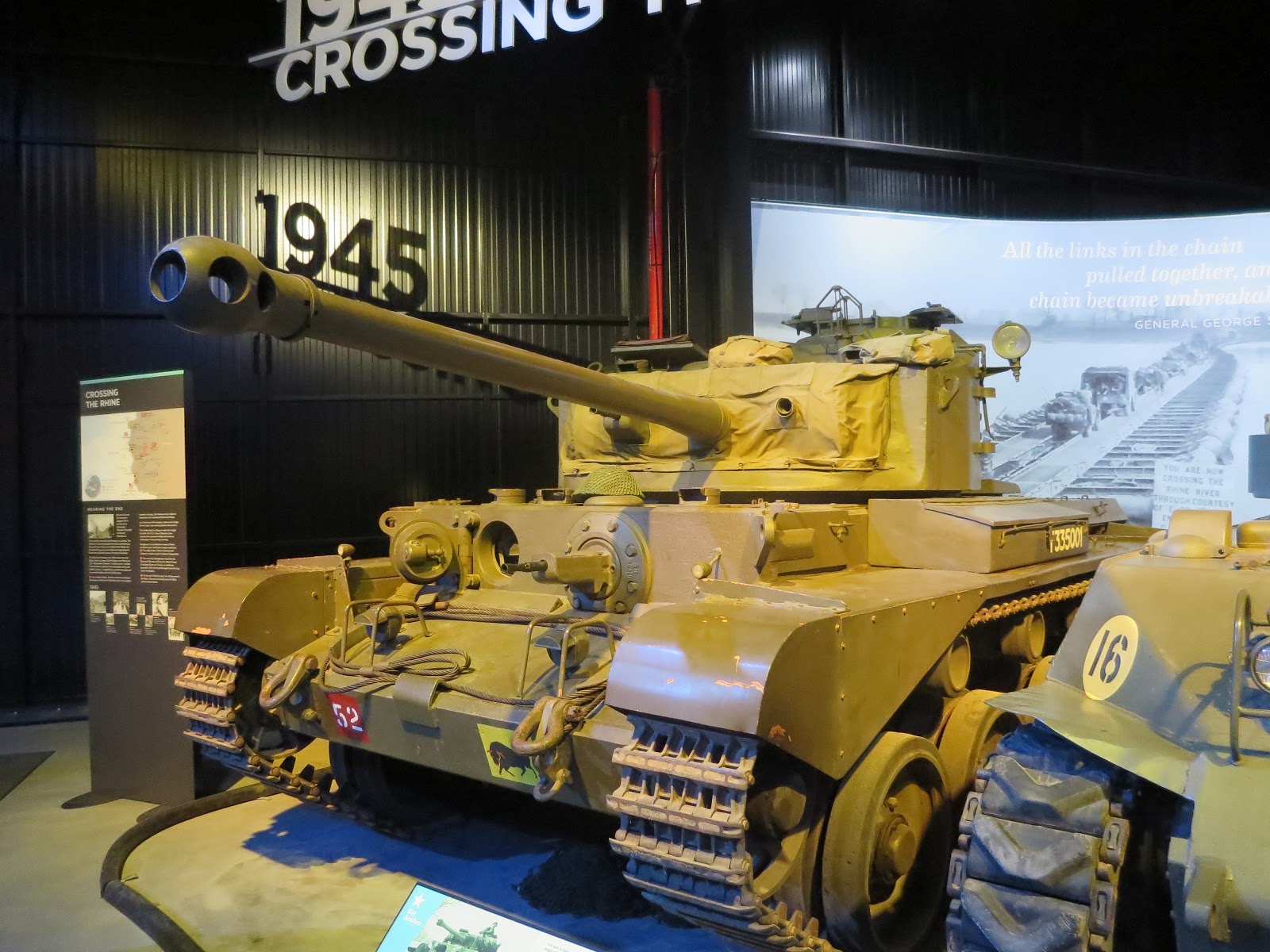
TANKS FOR THE MEMORIES: A TRIP TO THE AMERICAN HERITAGE MUSEUM & LITTLEFIELD COLLECTION

Recently, our club made a trip to the American Heritage Museum in Hudson, Massachusetts. Our club president and another member volunteer there, and so they arranged it so that we could visit during the day---and also have exclusive access to the vehicles for 30 minutes after the museum had closed. Very cool!
Despite it's name, the collection consists of equipment and vehicles from all major combatants, organized by era and theater of operations, with an emphasis on tanks (a quite impressive emphasis, I might add!).  
There are informative displays, such as this cutaway of a Sherman turret, and everywhere you look there is something to be seen--such as the small arms and Panzerfausts stowed in this German halftrack. 
 Our club also ran games of What a Tanker in the museum during the day. 
The first impression and centerpiece of the exhibit is this confrontation between a T-34 85 and Panther--throughout the day there is a laser light and sound show culminating in flames shooting out of the T-34 turret (not to be missed!).  
Here are some shots of the displays along with the informational placards.  Clix pix for BIG Pix: enjoy!

As if tanks weren't enough, there are a smattering of aircraft, with this magnificent Me 109 being the centerpiece (as far as I am concerned, anyway). 

There was soooooo much to be seen everywhere that it was easy to miss this SU-100 tucked in a corner behind the IS-2!

 The collection does not stop at World War II, but continues up through the Gulf Wars
To include Vietnam-era Soviet mainstays like the PT 76 and T-54

And the ultimate "Baddie" the T-64 (and it's brother here, the T-72). I was in US Army Europe when they fielded this thing, and I can tell you it got our attention!


The collection culminates with the US M60 and M1A1 main battle tanks, vehicles that I have served on (as well as the M60 A-3).  I wish the M60 was in US Army Europe camo pattern as opposed to desert--although it was in the Gulf War in small numbers, this tank really is associated with the Cold War and NATO, where it was the US Army's main battle tank for nearly 30 years: a minor niggle (everyone has an opinion).  During the after hours period, I was able to get inside the turret of the M60, something I had not done for nearly 30 years--I was surprised to find how familiar everything was despite the decades. Such, I suppose, is the imprint of military training and the nature of serving in armor units, where your daily existence is centered on and defined by operating these machines. I guess it's the same for pilots (and I'm sure other specialties). Despite the obvious passage of time, it is still strange to see vehicles that you served on in a museum, though--I'm glad that they didn't turn out the lights and keep me there as part of the display!
I'll conclude as I did on that day. On my way out, I looked up and was surprised to notice this V-1 buzz bomb hanging above! As I said, there is almost too much to take in: well worth the trip if you're in the region.
 
Excelsior!

Wednesday, June 12, 2019

A BULLY INTERLUDE--OR--DON'T RAIN ON THE PARADE!

West, William H. "The most stirring scene ever produced on any stage." Back cover of minstrel program. 1899. Strobridge Litho. Co., Cin'ti & New York. From the Library of Congress Prints and Photographs Division Washington, D.C. 20540 USA (found on Clkr.com). 

In this post, dear readers, we meander onto a brief topic that came up in an exchange among comrades in my gaming circle--history nerds that we all are. Whilst sharing a post-meeting meal with the fellows, I for some reason (since forgotten) made reference to a wonderfully (or awfully) captioned picture in a celebratory contemporary picture book I have of the Spanish American War...
 ...above, the source of the image (which shall be found at the conclusion of this post: patience, dear readers), published in 1898 by the Pearson Publishing Company, New York.  In describing the image, the book mentions a very unsplendid aspect of the war, for which we must give it at least some credit...
Willets, Gilson. Fever wards at the division hospital - Jacksonville, Florida. 1898. Black & white photonegative. State Archives of Florida, Florida Memory. Accessed 12 Jun. 2019.

....Specifically, it refers to the losses that the US Army suffered through disease--most of those coming from troops who never even left the country.  Here is how a 2004 history of military medicine in the Spanish American War addresses the topic:  

"108,000 volunteers from various states had been assembled in a handful of national encampments located in Georgia, Florida, Virginia, and Pennsylvania. With some notable exceptions, military officers had very little knowledge of the role of hygiene in the prevention of disease. As a result, the sanitary facilities in the camps rapidly became overwhelmed, and the resultant situation was appalling. Typhoid fever epidemics broke out in all of the encampments. Regiments in these camps suffered 20,738 cases of typhoid fever, which resulted in 1,590 fatalities."
Source: Vincent Cirillo. Bullets and Bacilli: The Spanish-American War and Military Medicine.  2004. Rutgers University Press.: New Brunswick, New Jersey, USA.256 pp. ISBN: 0-8135-3339-2 (hardcover).  Found at: The Journal of Clinical Investigation


And here is how it is covered (sort of) in the Bully 1898 Photographic History of the war:
"AN OFFICER’S TENT. At the close of the war the necessity of mustering out certain regiments and maintaining others created a difficult problem for the consideration of the administration. In most cases the officers were anxious to remain in the service; the men, on the other hand, wanted nothing more than to return to private life. Without attempting to lay responsibility on the shoulders of any one person or any particular department, it must be admitted that the affairs of the army might have been managed better than they were. Particularly was this so in connection with the selection of the sites for camping grounds. Here, indeed, was grave blundering. But though the chosen places were unsanitary, they were in most cases unusually picturesque. Our photograph shows the tent of a captain in the regular army, with the regimental colors in the foreground. No artist could have found a prettier spot, let the doctors say what they may" (page 219).

Excelsior!
Related Posts Plugin for WordPress, Blogger...